- China Toma Technology
- jyb@nanyn.com.cn

-

Call Us
13918167735
Call Us
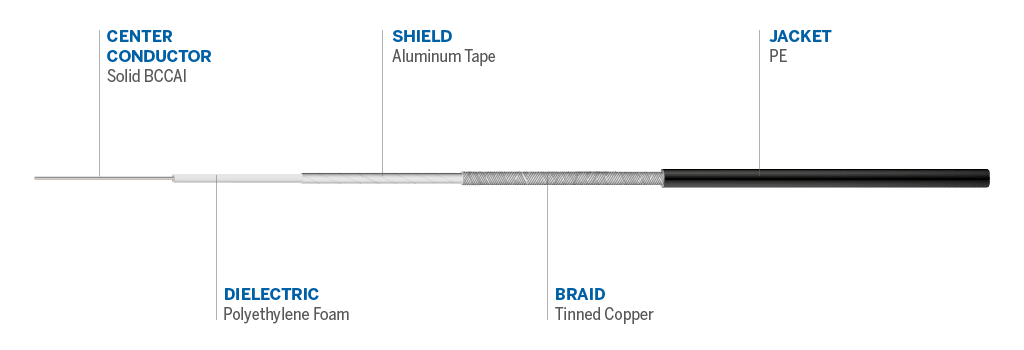
13918167735LMR-200 coax cable is a low-loss 50-ohm radio frequency (RF) cable commonly used in wireless antenna systems, IoT networks, WiFi installations, cellular systems, and other RF applications. Compared with standard coaxial cables such as RG-58, LMR-200 offers lower signal attenuation, improved shielding, and better overall RF performance.
One of the key advantages of LMR-200 is its double-shielded design, which significantly reduces signal loss and electromagnetic interference (EMI). This construction provides improved signal integrity compared to many traditional coaxial cable standards.
LMR-200 is also frequently compared to LMR-100 cable, which is thinner and used in shorter antenna cables. While both cables are suitable for RF applications, LMR-200 generally provides better performance due to its larger diameter and lower attenuation.
At Data Alliance, LMR-200 is widely used in our antenna extension cables, RF adapters, and wireless antenna assemblies designed for IoT devices, routers, gateways, and industrial wireless equipment.
Key Advantages of LMR-200 Cable
LMR-200 provides several advantages over smaller coaxial cables:
Lower Signal Loss (Attenuation)
Signal attenuation occurs whenever RF signals travel through coaxial cable. The longer the cable, the greater the loss. LMR-200 reduces this loss due to its larger diameter conductor and improved shielding design.
For example:
LMR-200 attenuation at 2.4 GHz:
0.30 dB per foot (0.98 dB per meter)
This lower attenuation helps preserve antenna gain and maintain stronger wireless signals over longer cable runs.
Double Shielding
LMR-200 uses two shielding layers:
Aluminum foil shield
Tinned copper braid
This dual-shield construction improves:
EMI protection
Signal stability
RF leakage reduction
The result is cleaner signal transmission, which is especially important in environments with multiple wireless devices or electrical noise.
Flexible Cable Design
Despite its improved performance, LMR-200 remains flexible and easy to route. It is similar in flexibility to RG-58 cable while offering much better electrical performance.
This flexibility makes it ideal for:
Router antenna extensions
IoT device antenna cables
Wireless access point installations
RF test setups
Industrial wireless equipment
Indoor and Outdoor Compatibility
LMR-200 cables are typically rated for both indoor and outdoor use and are designed to withstand temperature variations.
Typical temperature rating:
−40°C to +85°C
This allows LMR-200 cables to perform reliably in environments such as:
Outdoor wireless antenna installations
Industrial IoT environments
Commercial networking installations
Remote monitoring systems
Typical Applications for LMR-200 Cable
LMR-200 coaxial cable is widely used in RF applications across many frequency ranges. It performs well in systems operating between 0 GHz and 18 GHz, making it suitable for a broad range of wireless technologies.
Common applications include:
WiFi Networks
LMR-200 cables are frequently used with Wi-Fi antennas for standards such as:
802.11ac
802.11n
802.11a
802.11b
802.11g
Typical WiFi frequencies include:
2.4 GHz
5 GHz
Because of its low loss, LMR-200 helps maintain stronger signals between routers and external antennas.
IoT and Wireless Sensor Networks
Many Internet of Things devices use external antennas connected with coaxial cable. LMR-200 is commonly used in IoT systems operating at:
900 MHz
2.4 GHz
5 GHz
These systems include:
industrial monitoring sensors
agricultural IoT devices
smart infrastructure
wireless gateways
remote data collection systems
Cellular and LTE Applications
LMR-200 is also used in some cellular antenna applications such as:
LTE routers
cellular modems
signal boosters
M2M communication systems
RF Test Equipment
Because of its consistent impedance and shielding, LMR-200 can also be used in:
RF testing environments
laboratory equipment
antenna testing setups
LMR® standard is a UV Resistant Polyethylene jacketed cable designed for 20-year service outdoor use. The bending and handling characteristics are significantly better than air-dielectric and corrugated hard-line cables.
LMR® – DB is identical to standard LMR plus has the advantage of being watertight. The addition of waterproofing compound in and around the foil/braid insures continuous reliable service should the jacket be inadvertently damaged during installation or in the future.
LMR® – FR is a non-halogen (non-toxic), low smoke, fire retardant cable designed for in-building runs that can be routed anywhere except air handling plenums. LMRFR has a UL/NEC & CSA rating of ‘CMR/MPR’ and ‘FT4’ respectively.
LMR® – FR-PVC is a general-purpose indoor cable and has a UL/NEC & CSA rating of ‘CMR/MPR’ and ‘FT4’ respectively. It is less expensive than LMR-FR, however it emits toxic fumes (HCL) and greater smoke density when burned.
LMR® – PVC is designed for low loss general-purpose indoor/outdoor applications and is somewhat more flexible than the standard polyethylene jacketed LMR.
LMR® – PVC-W is a white-jacketed version of LMR-PVC for marine and other indoor/outdoor applications where color compatibility is desired.
LMR® – MA is a flexible cable designed specifically for mobile antenna applications. It has a PVC jacket and un-bonded aluminum tape to facilitate end stripping with automated equipment.
Flexibility and bendability are hallmarks of the LMR-200 cable design. The flexible outer conductor enables the tightest bend radius available for any cable of similar size and performance.
Low Loss is another hallmark feature of LMR-200. Size for size LMR has the lowest loss of any flexible cable and comparable loss to semirigid hard-line cables.
RF Shielding is 50 dB greater than typical single shielded coax (40 dB). The multi-ply bonded foil outer conductor is rated conservatively at > 90 dB (i.e. >180 dB between two adjacent cables).
Weatherability: LMR-200 cables designed for outdoor exposure incorporate the best materials for UV resistance and have life expectancy in excess of 20 years.
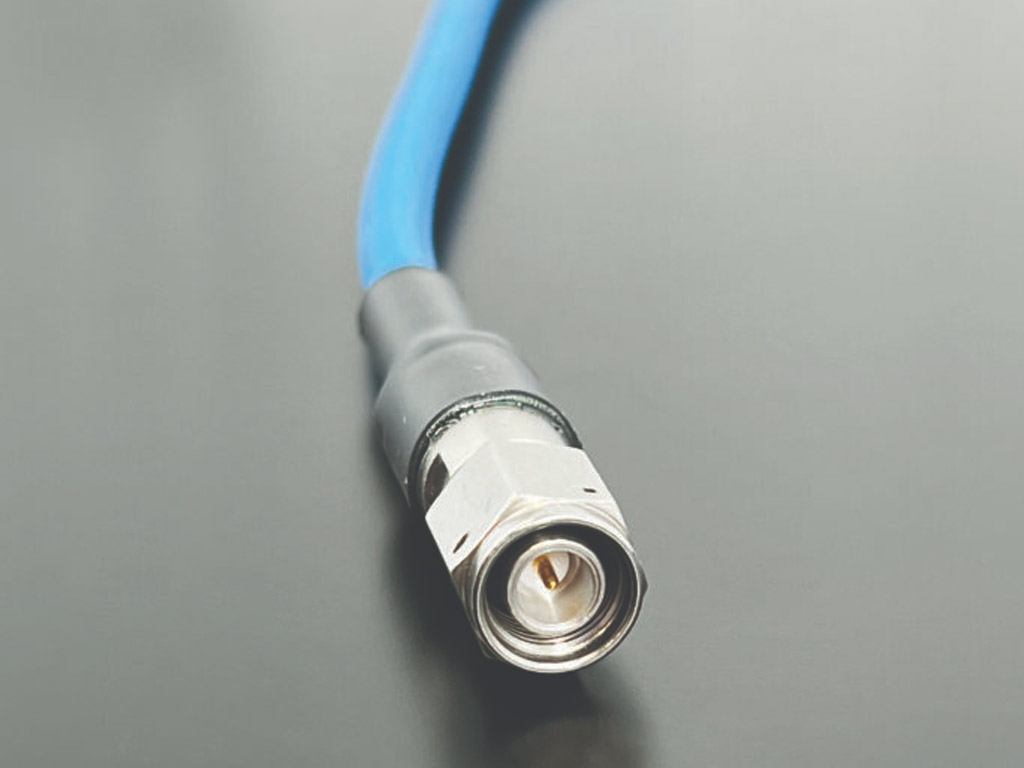
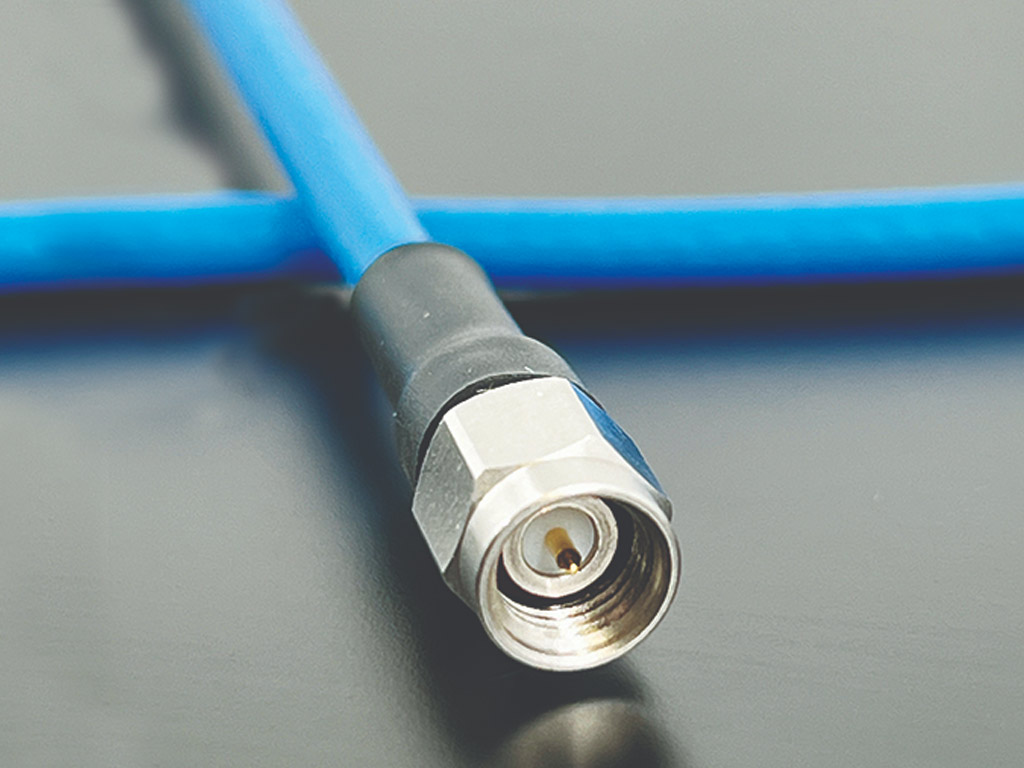
Connectors: A wide variety of connectors are available for LMR-200 cable, including all common interface types, reverse polarity, and a choice of solder or non-solder center pins. Most LMR connectors employ crimp outer attachment using standard hex crimp sizes.
Cable Assemblies: All LMR-200 cable types are available as pre-terminated cable assemblies. Refer to the section on FlexTech for further details.